Tech Debt Isn't a Coding Problem. It's a Leadership Problem.

We blame engineers for messy code. But tech debt is usually a symptom of decisions made (or avoided) higher up.
Every engineering team I’ve worked with has complained about tech debt. The codebase is a mess. There’s no time to fix it. We’re always firefighting.
And almost every time, when you dig in, the debt isn’t really a coding problem. It’s a leadership problem.
#What tech debt actually is
Tech debt gets thrown around loosely. But at its core, it’s simple: it’s the gap between how your code is and how it should be.
Sometimes that gap is intentional. You shipped fast to hit a deadline, knowing you’d clean up later. That’s a trade-off. Reasonable.
But most tech debt isn’t that. Most tech debt is the accumulation of small decisions over time. Shortcuts that were never meant to be permanent. Patterns that made sense once but don’t anymore. Code nobody fully understands because the person who wrote it left two years ago.
And here’s the thing: almost none of that happens because engineers don’t care. It happens because the environment makes it inevitable.
#How leadership creates debt
#Never saying no
Every feature request that gets a yes adds to the surface area of your codebase. More code means more to maintain. More edge cases. More things that can break.
Good leaders protect the backlog. They push back on scope. They ask “do we really need this?” before it becomes someone else’s problem to build and maintain.
When everything is a priority, nothing is. And the codebase pays the price.
#Rewarding speed over sustainability
What gets measured gets managed. If you only celebrate features shipped, that’s what you’ll get. Fast features, fragile foundations.
Teams respond to incentives. If cleaning up tech debt is invisible work that never gets acknowledged, don’t be surprised when it never gets done. The same incentive is quietly killing junior hiring.
#Ignoring the warnings
Engineers usually know where the problems are. They’ll flag it in retros. Mention it in one-on-ones. Put it on the roadmap that never gets prioritised.
If leadership consistently ignores these signals, or worse, treats them as whining, the problems compound. And by the time they’re impossible to ignore, they’re much harder to fix.
#No time for the boring work
Refactoring isn’t sexy. Upgrading dependencies isn’t a feature launch. Writing tests for legacy code doesn’t make the demo reel.
But this is the work that keeps systems healthy. If there’s never time for it, if it always gets bumped for “real work”, debt grows. Quietly, then suddenly.
#The symptoms show up late
Tech debt is sneaky. The codebase doesn’t collapse overnight. It degrades slowly.
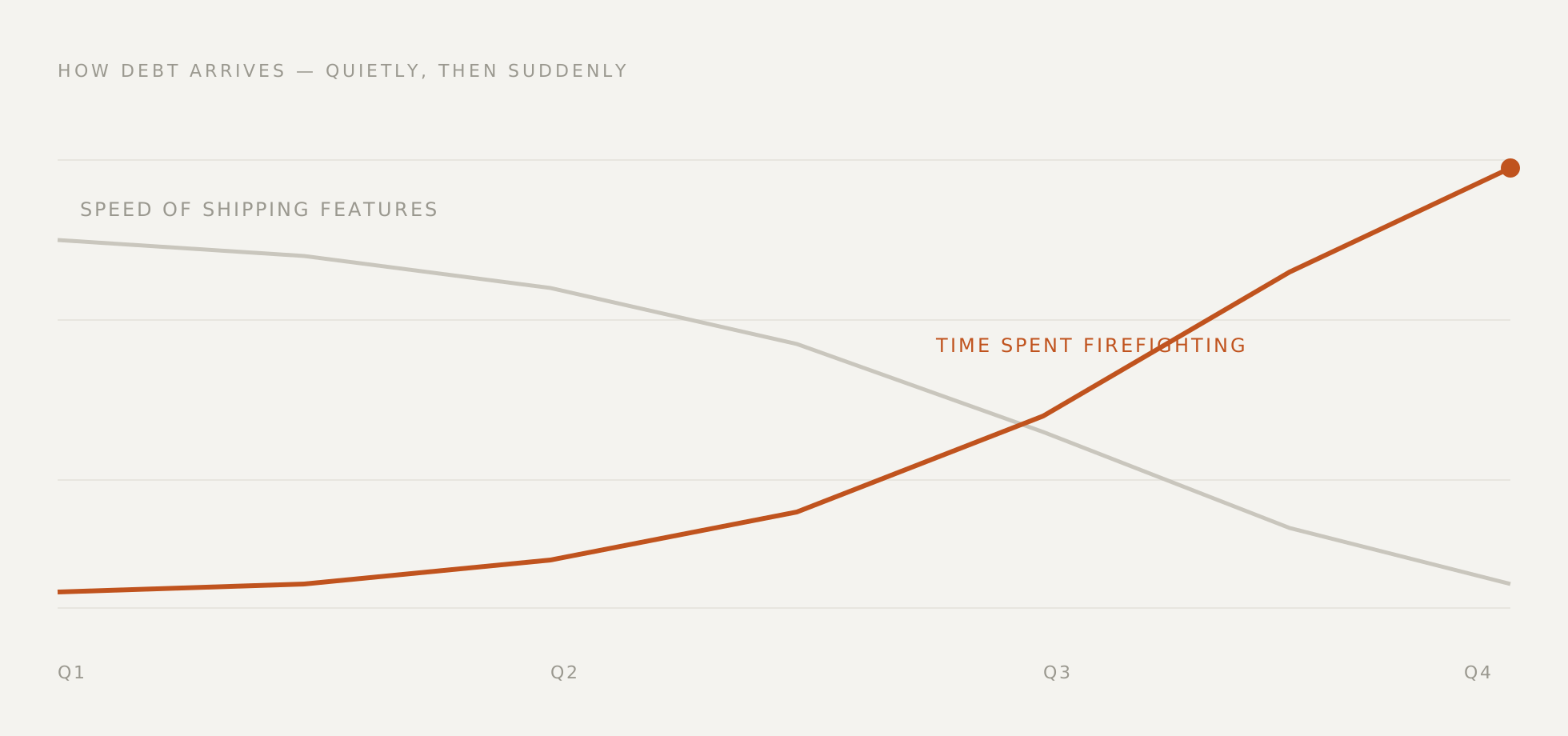
First, things take a bit longer than they should. Then bugs start appearing in unexpected places. Then new features become painful to ship because everything’s tangled together.
By the time leadership notices (usually when a big initiative is behind schedule) the debt is already significant. And the team has been living with it for months.
#What good leadership looks like
#Make space for maintenance
Build time for tech health into every sprint. Not as a “if we have time” bonus. As a non-negotiable.
At Gymshark, we eventually landed on dedicating real capacity to platform work. Not a hack day. Consistent, protected time.
#Celebrate the invisible work
When someone refactors a gnarly piece of code, that’s worth recognising. When a team pays down debt that’s been slowing them down, that’s a win.
What you celebrate shapes what people prioritise. Make the boring work visible.
#Listen to the engineers
They know where the bodies are buried. If your senior engineers are consistently raising the same concerns, pay attention. They’re not complaining. They’re trying to help.
#Own the trade-offs
Sometimes you do need to ship fast and accept some debt. That’s fine. But own it. Acknowledge it. And have a plan to pay it back.
The worst thing you can do is pretend the debt doesn’t exist, or expect the team to magically fix it without changing anything else.
#The honest conversation
Tech debt is a leadership problem because leaders control the environment. The priorities. The incentives. The pace.
You can hire the best engineers in the world. Give them unlimited time. All the tools. But if the system they’re working in rewards short-term speed over long-term health, debt will accumulate.
That’s not a coding problem. That’s a culture problem. And culture starts at the top.
#Wrapping up
Next time your team says the codebase is a mess, resist the urge to blame the code. Or the engineers.
Ask instead: what decisions led here? What priorities shaped this? What are we going to change so it doesn’t happen again?
Tech debt is real. But it’s usually a symptom, not a cause. Fix the system, and the code will follow.
One email a week. No fluff, no frameworks.